

A garage door that refuses to close is more than an inconvenience — it is a security risk, a weather hazard, and often a warning sign of a bigger mechanical problem brewing behind the scenes. Before you force the door, jam a screwdriver into the track, or ignore the issue and hope it fixes itself, it helps to understand what is actually going wrong. Many of the most common culprits are easy to spot once you know where to look, while others require a trained eye and the right tools. This guide walks through the most likely causes, so you can decide whether it is a five-minute fix or a job for a professional.
Inspect the Photo-Eye Sensors for Misalignment
Almost every modern garage door has a pair of small sensors mounted a few inches off the ground on either side of the door track. These photo-eye sensors send an invisible beam between them, and if that beam is broken or the sensors are not perfectly aligned, the door will refuse to close as a built-in safety measure. Dirt, spider webs, or a bump from a bicycle or lawn mower can knock them out of alignment without you ever noticing.
Check for a small LED light on each sensor. A steady light usually means proper alignment, while a blinking light signals a problem. Wipe the lenses clean with a soft cloth and gently adjust the bracket until both lights stay solid, then test the door again.
Test the Remote Batteries and Wall Switch Function

Before assuming the worst, rule out the simplest explanations first. A weak remote battery, a malfunctioning wall switch, or interference from another electronic device can all prevent the closing signal from reaching the opener. This is especially common if the door worked fine yesterday and suddenly stopped responding today.
- Replace the remote battery and retest
- Try using the wall-mounted button instead of the remote
- Check that the antenna on the motor unit hangs freely
- Reset the remote’s programming if it has stopped syncing
Examine the Torsion Springs for Wear or Breakage
The springs mounted above the door do the heavy lifting, literally, by counterbalancing the weight of the panels so the opener motor does not have to strain. When a spring weakens or snaps, the door can feel unusually heavy, close unevenly, or stop partway through its cycle. This is one of the most dangerous components to troubleshoot yourself, since torsion springs are under extreme tension.
If you notice a visible gap in the coil, hear a loud bang from the garage at some point during the day, or see the door sagging to one side, you are likely dealing with a broken spring. Broken spring repair should always be handled by someone with the proper tools and training, since an improperly released spring can cause serious injury. Attempting a DIY fix here is one of the few garage door repairs that genuinely warrants professional intervention every time.
Check the Tracks for Obstructions or Bent Rails
The metal tracks on either side of the door guide the rollers as the door moves up and down, and even a small obstruction can throw the entire system off. Dirt buildup, a stray toy, or a dent in the rail can cause the rollers to jump the track or bind up partway through the cycle. This often shows up as jerky movement or a door that stalls before fully closing.
- Look for visible dents or bends along the length of the track
- Clear away dirt, leaves, or debris inside the channel
- Confirm the mounting brackets are still tightly secured to the frame
- Use a level to check that both tracks are still plumb and even
Listen for Unusual Motor or Gear Noises
The opener unit mounted on the ceiling does most of the work, and its sounds can tell you a lot about its health. Grinding, clicking, or straining noises during operation often point to a worn gear, a slipping belt, or a motor that is nearing the end of its lifespan. If the door starts to close and then reverses on its own, the motor may be misreading resistance as an obstruction.
Age matters here as much as sound. Openers typically last 10 to 15 years, and if yours is approaching that range alongside odd noises, it may be more cost-effective to replace the unit than to keep patching it. Reputable garage door companies can usually diagnose motor issues over a quick service visit and let you know whether a repair or full replacement makes more financial sense.
Review the Door Panels for Structural Damage
Sometimes the problem is not mechanical at all but structural. A dented, warped, or cracked panel can prevent the door from sitting flush in its frame, which throws off the sensors, tracks, and overall alignment. This is especially common after a minor collision, a hailstorm, or years of exposure to the elements.
If the damage is limited to one panel, it is often possible to replace just that section rather than the entire door. However, extensive rust, wood rot, or warping across multiple panels usually signals it is time to consider a new garage door installation rather than continually patching an aging structure. A fresh install also gives you the opportunity to upgrade insulation, security features, and curb appeal all at once.
Address Uneven or Cracked Garage Flooring Beneath the Door
The fix depends on how severe the damage is. Minor dips or gaps can sometimes be addressed with a threshold seal kit that bridges the uneven area, while larger cracks or noticeable slab settling may call for a concrete leveling or resurfacing job from a professional. In cases where the slab has settled significantly or crumbled near the threshold, it may be worth calling a concrete company to assess whether leveling or a partial repour is the better long-term fix, and some homeowners also look into polyaspartic flooring services at this stage since the durable coating can help protect a repaired slab from future cracking and moisture damage. Ignoring it does not just affect the seal, either — a door repeatedly forcing itself against an uneven surface can wear down the bottom seal faster, strain the opener, and gradually bend the track alignment.
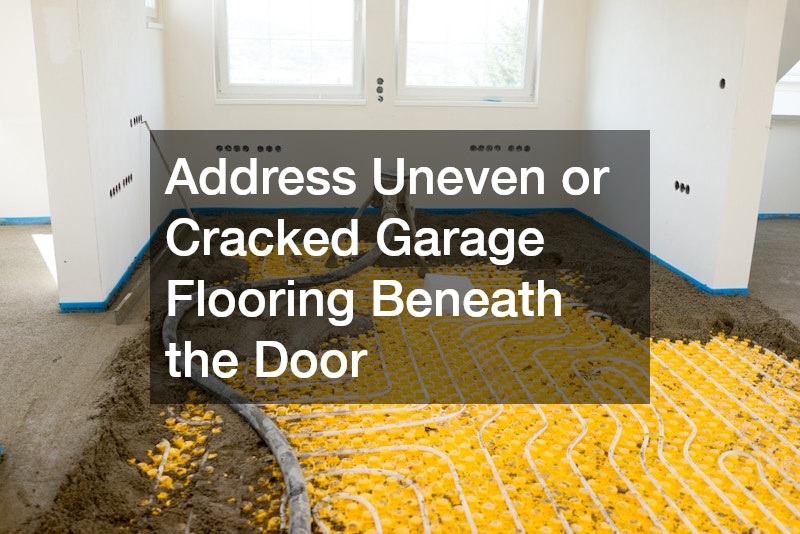
Before assuming the door itself is the culprit, take a close look at the concrete slab it rests on. Even a quarter-inch of unevenness or a crack running beneath the threshold can prevent the bottom seal from making full contact, allowing the door to hang up, trigger the safety sensors, or simply refuse to close all the way.
Homeowners dealing with chronic flooring issues sometimes take the opportunity to have the whole garage floor addressed at once. A garage floor coating can smooth out minor imperfections and protect against future cracking, giving the bottom seal a consistent, even surface to rest against when the door closes. Epoxy and polyaspartic coatings are popular choices here, since both can fill hairline cracks and build up low spots by a millimeter or two while creating a durable, moisture-resistant finish that holds up under vehicle traffic.
Before applying any garage floor coating, though, it is worth checking that the slab itself is structurally sound. Cracks wider than about 1/8 inch, noticeable heaving, or sections that shift underfoot may signal settling or drainage problems that a surface coating won’t fix — in those cases, a concrete contractor should evaluate the slab first.
It also pays to clean out debris from cracks with a wire brush or shop vac, and to confirm the surface is properly sloped, typically about a 1/8-inch drop per foot, so water drains away from the door rather than pooling beneath it. Skipping this step can trap moisture under the new coating, leading to bubbling, peeling, or renewed cracking within a year or two.
Clear Out Clutter That Blocks the Door’s Path
It sounds obvious, but a surprising number of service calls turn out to be caused by something as simple as a stored ladder, a bike, or a stack of boxes leaning too close to the door’s swing path. Garages tend to become catch-all storage spaces, and over time that clutter can creep into the clearance zone the door needs to operate safely. A quick visual sweep of the space before troubleshooting anything mechanical can save you a service call entirely.
- Check for stored items leaning against the tracks or sensors
- Remove seasonal decorations or sports equipment stacked near the door
- Confirm nothing is propped against the wall within the door’s swing radius
- Consider a building clean out if the garage has become too crowded to inspect safely
Know When Renovation or New Construction Plays a Role

If your garage door trouble started right after a home renovation, a new driveway pour, or a construction project nearby, the timing is not a coincidence. Construction dust, debris, and vibration can all interfere with sensors, tracks, and openers. Fine particles settle into roller tracks and photo-eye lenses, while heavy equipment nearby can jar mounting brackets loose or knock alignment out of true, even if nothing looks visibly damaged.
New concrete work deserves special attention. A freshly poured driveway or garage floor can shift slightly as it cures over the following weeks, which sometimes changes the door’s clearance at the bottom seal and causes it to bind or refuse to latch properly.
It is also common for leftover metal scraps, old spring coils, or damaged panel sections from a repair to pile up in the corner of the garage. Torsion springs under tension and jagged track pieces are especially risky to leave lying around, since they can cause cuts or trip injuries months after the work is done. Taking them to a scrap yard is a simple way to clear the space, avoid tripping hazards, and often recoup a small amount of cash for the metal.
Before assuming the opener itself is at fault, it is worth walking the garage and noting anything that changed alongside the renovation timeline: new flooring height, relocated shelving, added insulation, or rewired outlets near the opener unit. Any of these can subtly affect how the door operates even weeks after the crews have packed up.
If you’re working with a home builder on new construction or a major remodel, make sure the garage door and opener installation is scheduled and inspected as a distinct step, not an afterthought squeezed in at the end of the project. Garage doors are often one of the last items installed, which means they can get rushed if the project is running behind or if crews are eager to close out the punch list.
Ask your home builder specifically how the door will be leveled, how the tracks will be aligned, and how the opener’s force and travel limits will be calibrated once installed. These aren’t minor details — a door that’s off by even a quarter inch at the track can bind, and an opener with improperly set force limits may struggle to close or reverse unexpectedly.
Poorly timed installation, rushed alignment, or skipped calibration during a build is a common source of the exact problems described throughout this guide. Concrete slabs that haven’t fully cured, framing that’s slightly out of square, or drywall dust contaminating rollers and sensors can all create issues that surface weeks or months later.
Before final walkthrough, request a written confirmation that the door was tested through a full open-close cycle, that safety sensors were checked for proper alignment, and that the opener’s settings were documented. This paper trail matters if problems appear after move-in and you need to hold the builder or installer accountable under warranty.
Most garage door problems fall into a handful of predictable categories, and simply working through them methodically can save you time, money, and frustration. Start with the easy checks, like sensors, batteries, and clutter, before assuming you are dealing with a major mechanical failure. If you do find a broken spring, structural panel damage, or a motor on its last legs, do not hesitate to bring in a qualified professional rather than risking injury or further damage. Taking care of the problem now, while it is still a minor annoyance, is always easier than dealing with a garage door that fails completely.